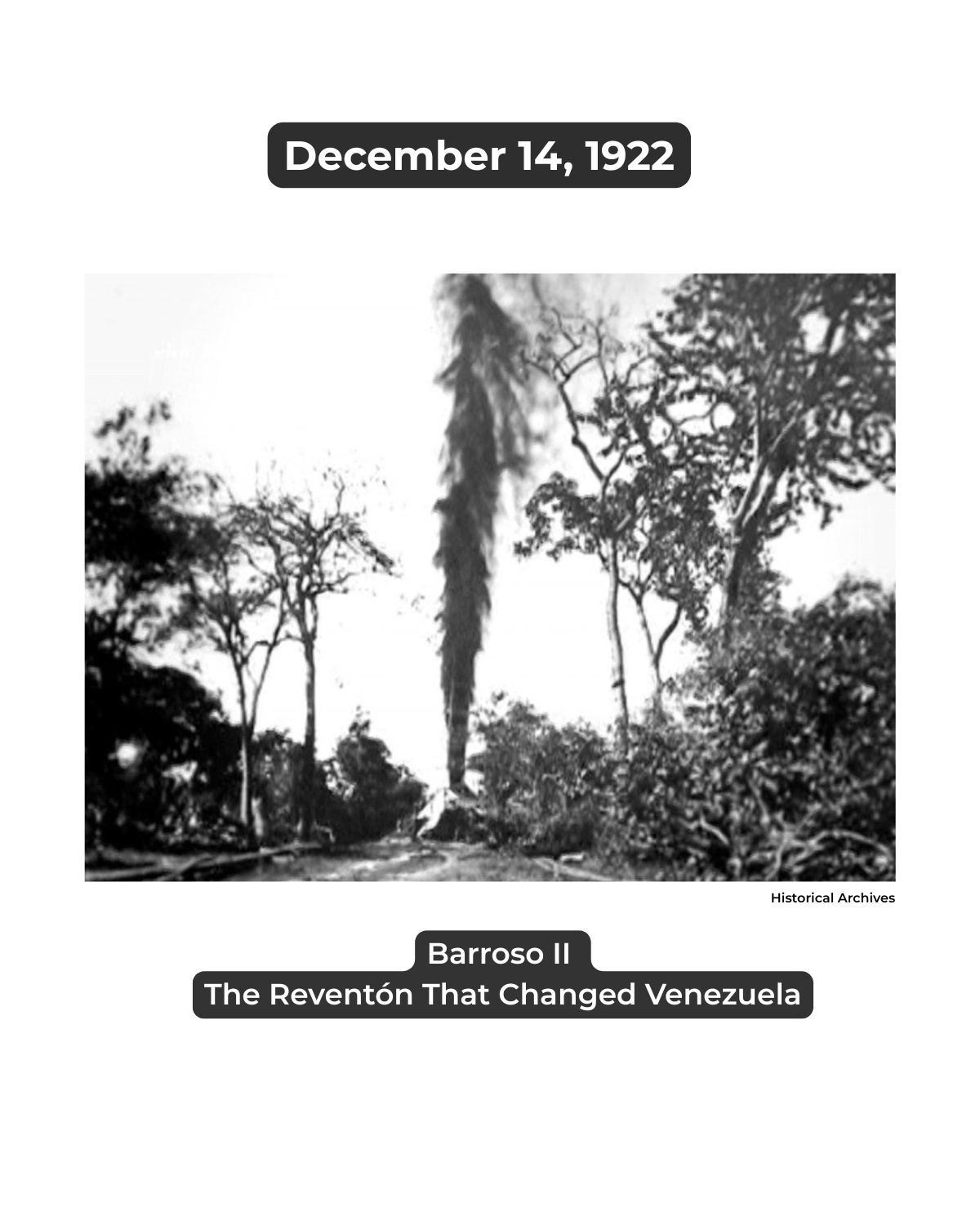
In the cyclical history of Venezuela’s oil industry, legal frameworks have served as both accelerators and brakes on development. As Venezuela stands on the precipice of a new legal era with the National Assembly’s approval of the 2026 reform to the Organic Law on Hydrocarbons, it is instructive to look back at the legislation that originally transformed the nation from an agricultural backwater into a global energy powerhouse: the Hydrocarbons Law of 1922.
Much like the current reform seeks to attract capital after a period of stagnation, the 1922 Law was crafted to provide stability and incentives for foreign investment. Central to this historical framework was the jurist Pedro Manuel Arcaya, whose pragmatic vision shaped a regime that governed the industry's most explosive period of growth under Juan Vicente Gómez (1908–1935). While Gómez's regime delivered the political stability and legal predictability that capital demanded, it did so through force, a reminder that institutional coherence and democratic governance do not always coincide.
Perhaps the most singular achievement enabled by the 1922 Law was the restoration of Venezuela's financial sovereignty. The influx of oil revenues allowed the Gómez administration to accelerate debt repayment significantly. On December 17, 1930, in commemoration of the centenary of Simón Bolívar’s death, Venezuela paid off its entire foreign debt. By the time of Gómez's death in 1935, the internal public debt was also almost completely repaid. This period stands as a unique anomaly in the nation's history, a moment where the state was virtually debt-free, a sharp contrast to the massive indebtedness that characterized the oil booms of the 1970s and 2000s.
The Role of Pedro Manuel Arcaya
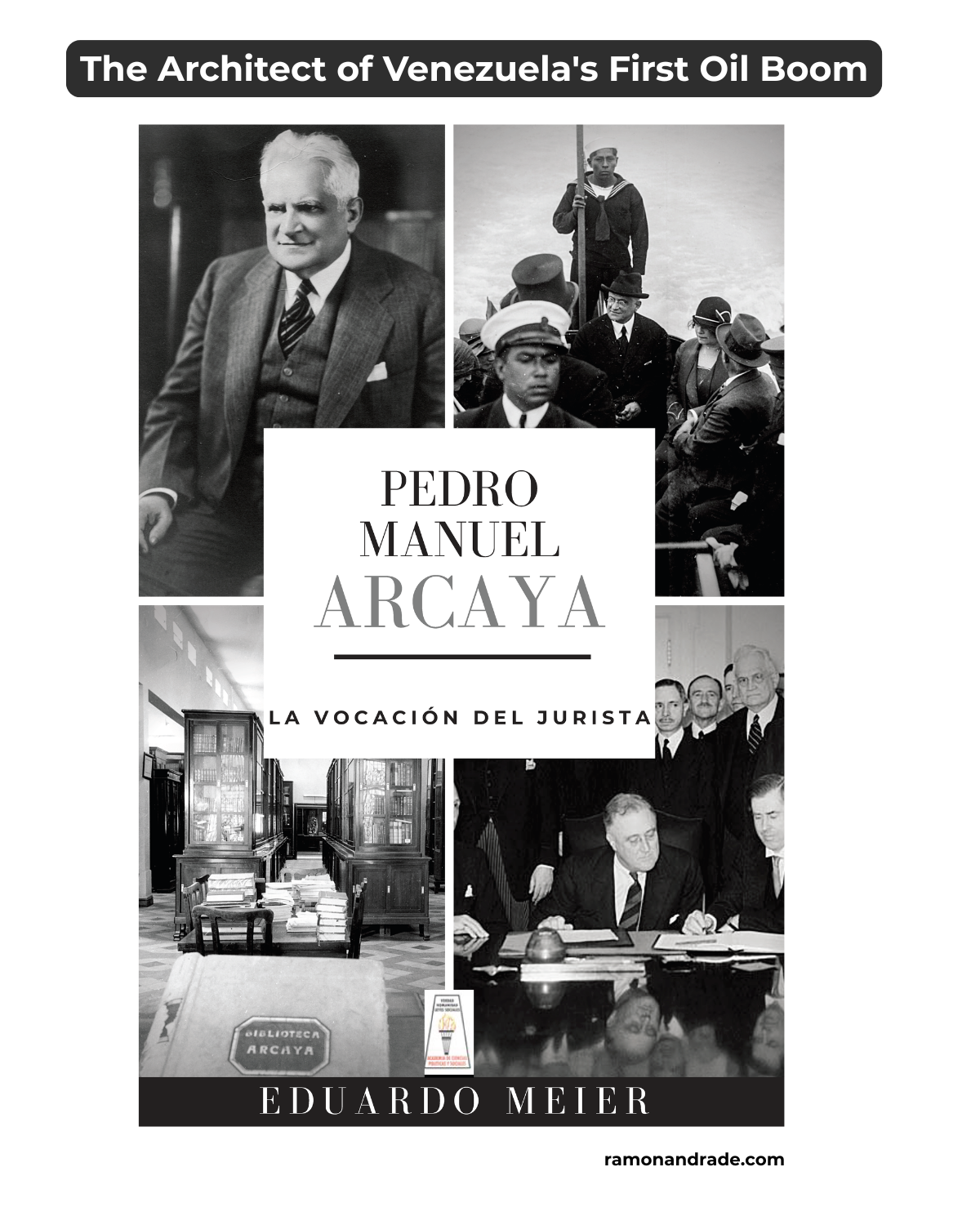
While Gumersindo Torres, the Minister of Development, is often credited with organizing the early oil bureaucracy, Pedro Manuel Arcaya played a pivotal intellectual and drafting role in the legislation of that era. A close friend of Torres and the President of the Senate, Arcaya, was commissioned to study the most efficient means of stimulating production and increasing government revenues.
Arcaya’s legal philosophy was rooted in a distinct pragmatism regarding the state’s limitations. He rejected the idea that the government should directly exploit oil deposits, arguing that such an endeavor was too costly and would impose risks the state could not manage. Instead, he advised the government to act as an overseer, granting concessions to companies that would pay taxes for the privilege of exploitation.
Arcaya was instrumental in drafting the 1920 Oil Law and, subsequently, the 1921 and 1922 versions, refining the text to balance national interest with corporate feasibility. His correspondence and legislative notes reveal a lawyer acutely aware that Venezuela's bargaining power lay not in denying access to resources, but in structuring the terms of access to maximize state capture of economic rent over time. His influence extended to incorporating mechanisms that curbed speculation by intermediaries and to advocating systems that encouraged "serious concerns" rather than mere concession flippers.
Benefits of the Hydrocarbons Law of 1922 and the Corporate Influx
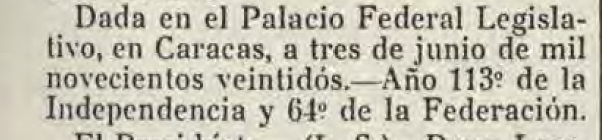
LEY SOBRE HIDROCARBUROS Y DEMAS MINERALES COMBUSTIBLES
The 1922 Law was not merely a revision; it was a stabilizing instrument that corrected the ambiguities and rigidities of the 1920 and 1921 attempts. Its benefits were immediate and profound, catalyzing the installation of more than 100 operating companies in Venezuela by 1931.
The law extended concession terms to 40 years, providing the long-term investment horizon necessary for capital-intensive projects. This stability was crucial for foreign companies to commit to building infrastructure in a country that lacked it.
The legal certainty provided by the Gómez regime attracted the world's most powerful oil entities. While General Asphalt (via its subsidiary New York and Bermudez Co.) was an early entrant, the favorable climate catalyzed a massive influx of capital from the world's oil majors.
Shell, on its part, dominated the early years, operating through subsidiaries such as Caribbean Petroleum Company Ltd (CPC) (acquired in 1913), Venezuelan Oil Concessions Ltd (VOC), and Colon Development Co. Ltd (CDC). Then, the American giant Standard Oil, later known as Exxon, entered the fray aggressively, operating through the Standard Oil Company of Venezuela and eventually acquiring the Creole Petroleum Corporation. The next oil major to enter the scene was Gulf Oil, which emerged through the Venezuelan Gulf Oil Company and became a key player in the Maracaibo basin.
By the time of Gómez’s death in 1935, these three conglomerates, Shell, Standard Oil (Exxon), and Gulf, controlled the great majority of Venezuela's total oil production. However, beyond the "Big Three," the 1922 framework attracted numerous other international entities, including Lago Petroleum Company (later absorbed by Standard), Sun Oil Co. (via Venezuelan Oilfields Co. Ltd.), British Controlled Oilfields Ltd., North Venezuelan Petroleum Company, and Pantepec Oil Co. of Venezuela.
Other Key Features of the Hydrocarbons Law of 1922
Friendly Royalties
The law established a royalty (production tax) of 10% of the oil’s commercial value, which could be reduced to 7.5% for concessions in remote areas or underwater. While lower than the 15% proposed in earlier drafts, this rate secured the goodwill of operators and ensured immediate revenue flow for the treasury.
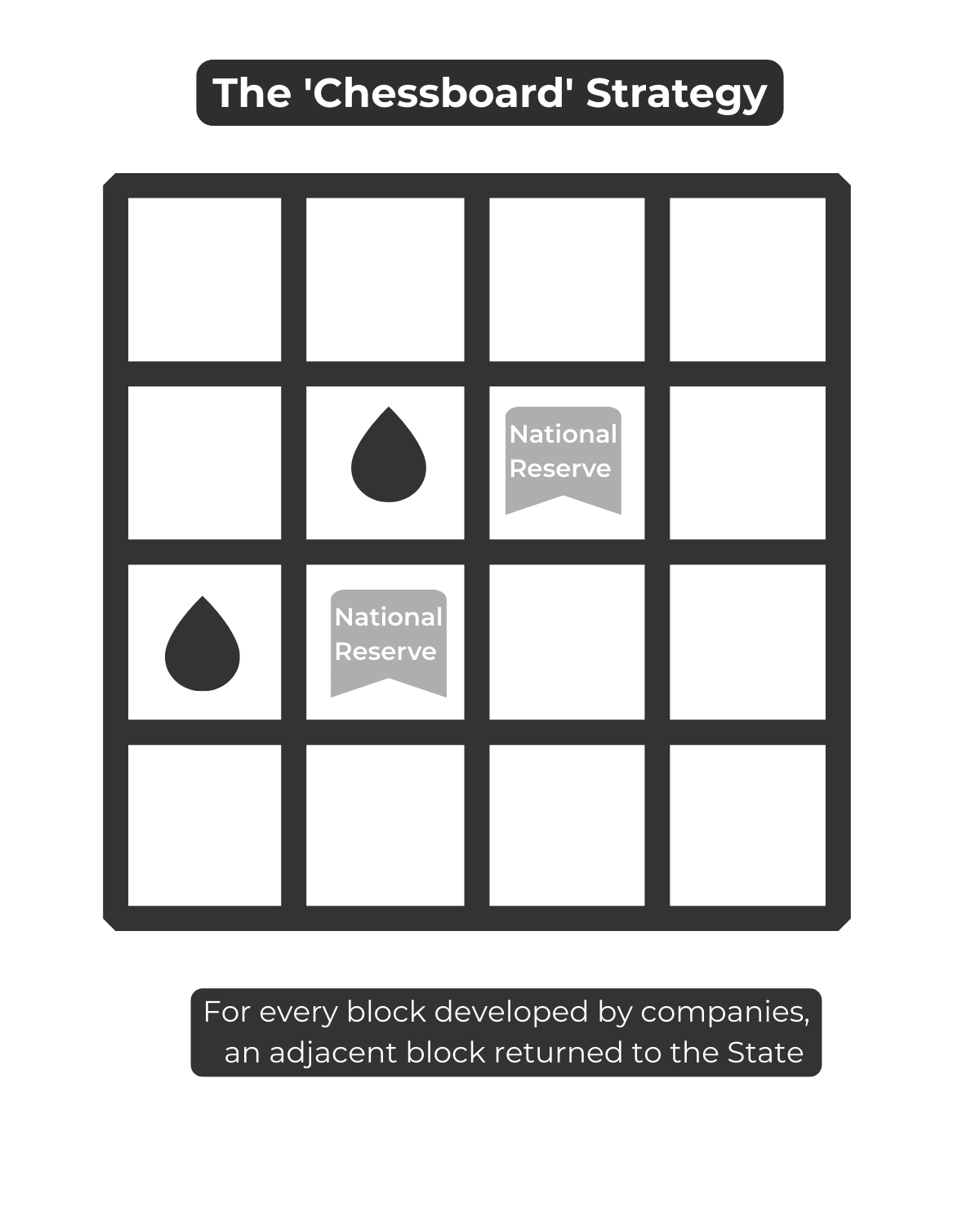
The "Chessboard" Strategy (National Reserves)
A defining element consolidated by the 1922 Law was the "chequered" demarcation of land, a concept originally championed by Minister Gumersindo Torres and General Gómez. Under this system, after the exploration phase, companies were required to return half of the land to the State. The concessions were laid out in a checkerboard pattern: for every block the company developed, an adjacent block reverted to the State as a "National Reserve." This was a masterstroke of state capitalism. As private companies assumed the risk to prove that a field contained oil, the value of the State's adjacent "squares" on the board increased dramatically. The government could then auction these reserves to the highest bidder, thereby capturing the rent without investing any capital in exploration. While the 1922 Law made the geometry of these blocks more flexible to appease company complaints about fragmentation, it firmly institutionalized the State's ability to capture the upside of private discovery.
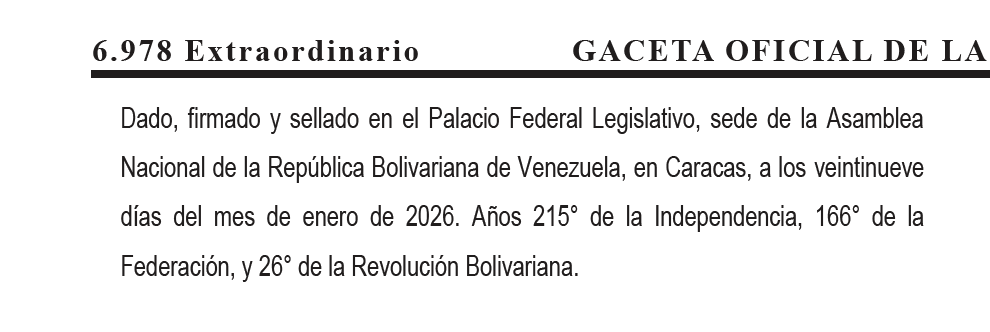
LEY DE REFORMA DE LA LEY ORGÁNICA DE HIDROCARBUROS
Parallels with the Hydrocarbons Law of 2026
More than a century later, the Reform of the Organic Law on Hydrocarbons, approved in January 2026, echoes the pragmatic spirit of Arcaya’s work. Both legal frameworks emerged during times when the state lacked the financial capacity to develop its own resources and sought to leverage private capital to maximize national income.
Rejection of Direct State Exploitation
Just as Arcaya dismissed direct state exploitation as too costly in 1920, the 2026 reform implicitly acknowledges the state's inability to fund the industry. The new law establishes "Contracts for the Development of Primary Activities" (often called Productive Participation Contracts), under which private companies assume "integral management" at their own "exclusive cost, account, and risk". Under this new model, the state assumes no financial debts arising from operations.
Flexible Fiscal Incentives
The 1922 Law offered reduced royalties (lowering the standard 10% rate to 7.5%) for difficult terrains. Similarly, the 2026 reform abandons the rigid 30% royalty fixed in 2001. The new Article 51 establishes a flexible rate of "up to thirty percent (30%)," granting the National Executive the authority to determine the specific percentage for each project and to modify it to ensure "economic viability" and international competitiveness. Both laws use fiscal flexibility to unlock investment in complex fields.
Dismantling Barriers to Entry: The 1922 Law fixed the restrictive land caps of the 1920 law to encourage mass adoption. The 2026 law dismantles the state monopoly established in 1975 and 2001. By amending Article 22 (now 23), the amendment allows private companies domiciled in Venezuela to conduct primary activities directly, thereby removing the mandatory requirement that the state hold a majority stake in all upstream operations.
Commercial Autonomy: Arcaya’s framework permitted concessionaires such as Caribbean Petroleum and VOC to sell and export their products freely. The 2026 law restores this right, which had been stripped by the 2001 legislation. The reform explicitly authorizes private operators to "directly commercialize" their production, breaking the state’s monopoly on exports.
Legal Security and Arbitration: The 1922 Law sought to prevent international disputes by creating a clear rule of law following the chaotic early concession years. The 2026 reform goes a step further by explicitly authorizing "independent arbitration," overturning the 2001 ban on foreign dispute resolution. This signals a return to the investor protections that defined the early concession era, though it should be noted that national-level legal protections operate within the constraints of international sanctions frameworks. The reform's practical impact thus depends, in part, on the evolution of U.S. Treasury policy under OFAC General License regimes.
The Challenge of Replication
Yet history never truly repeats itself; it rhymes at best. The 1922 Law succeeded not merely because of Arcaya's technical design, but because it operated within a specific constellation of conditions: enforced political stability under the Gómez dictatorship, a global economy desperate for new oil sources following World War I, and a complete absence of geopolitical constraints on Venezuelan exports.
The 2026 reform operates in a fundamentally different environment. Venezuela's institutional capacity has been hollowed out by two decades of politicization and brain drain, leaving PDVSA an "empty shell" compared to the burgeoning bureaucracy of the 1920s, which was actively professionalizing its technical and fiscal oversight. More critically, the reform's success depends on factors beyond national control.
While the 1922 law invited capital into a jurisdiction where the state deliberately adapted its legal framework to attract investors, the 2026 opening emerges from a State that, prior to the January 3 U.S. military operation resulting in the capture of the national leadership, represented everything a foreign investor fears: contract repudiation, asset expropriation, and regulatory unpredictability. The current opening is therefore strictly constrained by external frameworks. OFAC General License 46 and Executive Order 14373 impose conditions unimaginable in Arcaya's era: they dictate not only who may purchase Venezuelan oil but mandate that proceeds flow into U.S.-controlled "Foreign Government Deposit Funds", an arrangement that effectively subordinates national fiscal sovereignty to international oversight during a transitional period whose duration is unknown.
Beyond sanctions architecture, the reform must overcome the reputational damage inflicted by the "statist rigidity" and serial contract repudiations of the 2001–2007 era. International oil majors, now increasingly focused on energy transition and portfolio discipline, must weigh the geological opportunity against decades of broken commitments.
The genius of the 1922 framework was that it aligned state interests with private incentives during the exploration phase, as the state captured value automatically through the "checkerboard" system of national reserves while companies proved up fields. The 2026 reform seeks to reintroduce this alignment through "Productive Participation Contracts," under which private operators assume 100% of the costs and risks in exchange for a share of production. However, whether this legal innovation can deliver depends on credibility. In 1922, Gómez's authoritarian control provided the political stability and contract enforcement that capital demanded. His regime's demonstrated willingness to honor contracts and facilitate foreign investment made commitments credible. Today's Venezuela must rebuild that credibility under conditions of external supervision and political transition that Gómez never faced.
Conclusion
The Hydrocarbons Law of 1922 was the legal bedrock upon which the Venezuelan oil giant was built. Its drafter, jurist Pedro Manuel Arcaya, advised the Gómez administration that direct state exploitation was too costly and risky; instead, the state should act as an overseer, capturing rent through taxation while private capital assumed the operational risk. The 2026 Reform represents a modern realization of that same pragmatic principle. By dismantling the statist rigidity codified in the 2001 Hydrocarbons Law and hardened by the 2006 contract migrations, Venezuela is effectively returning to a concession-like model through "Productive Participation Contracts." Under this new regime, private operators once again assume "integral management" at their own "exclusive cost, account, and risk," while the state secures revenue through royalties and taxes without assuming financial debts.
Whether this legal architecture can engineer a second historic boom depends on factors Arcaya never had to consider: the constraints of U.S. sanctions (specifically OFAC licensure), the global shift toward energy transition, now explicitly codified as a guiding principle in Article 1 of the 2026 Law, and the monumental challenge of rebuilding institutional credibility after decades of expropriation and contract repudiation. The 2026 law provides the necessary legal framework, dismantling state control and reintroducing international arbitration to mitigate risk. However, whether it proves sufficient will be determined not by legislative text, but by the often unpredictable realities of implementation, the transition to democratically legitimized power structures that provide stability to the authorizing political body, and the government's ability to honor commitments over the decades-long horizon that oil investment requires.
The parallel with 1922 is instructive, not as a roadmap for guaranteed success, but as a reminder that Venezuela has done this before. Legal clarity, fiscal pragmatism, and respect for private capital, elements that defined the 1922 boom, can unlock extraordinary national wealth, provided the political conditions exist to enforce them.